What to feed fish fry first: a size-by-size guide
Most fry losses in the first week are starvation in a tank full of food that is simply too big. Work up this ladder by mouth size, not by what is convenient — and keep at least one culture running before your fish even spawn.
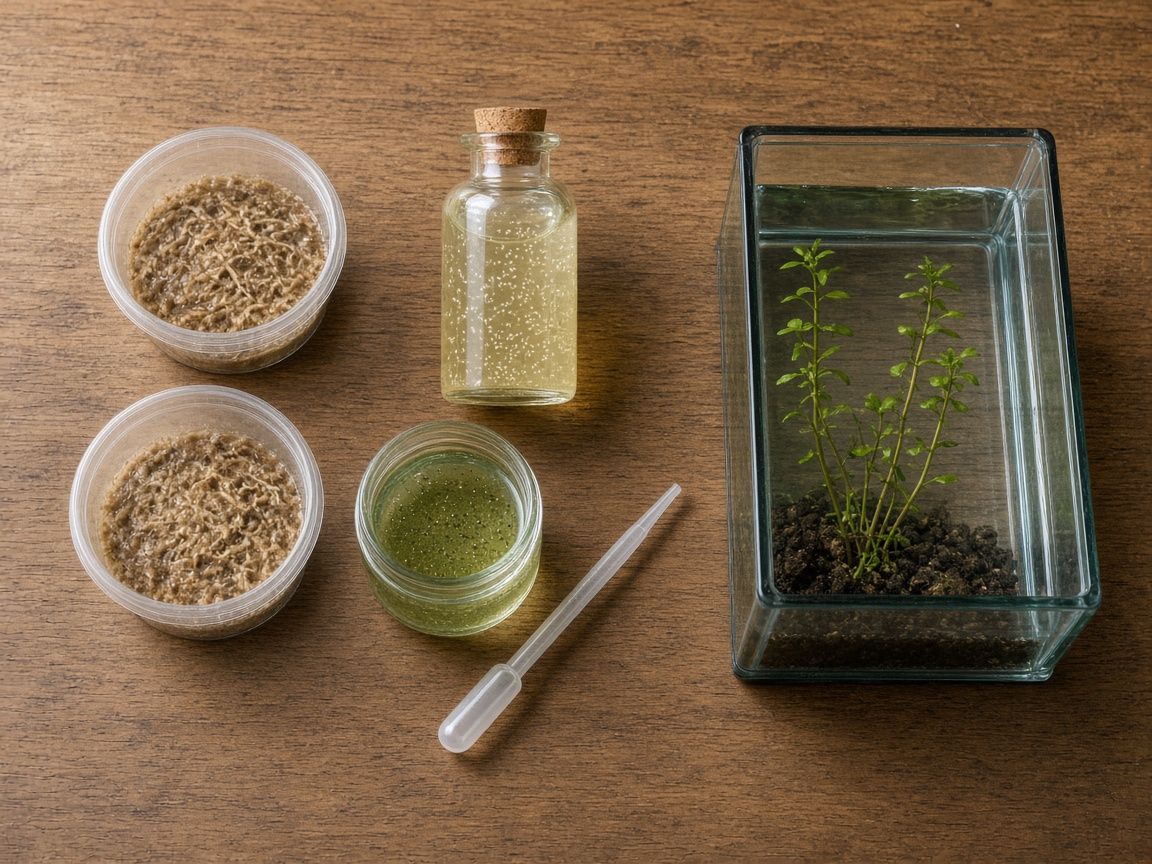
The fry-food ladder
- Day 1–3, tiniest fry (many tetras, rainbowfish): vinegar eels — they swim in the column for hours
- Very small fry: banana worms — smaller and thinner than microworms
- Small fry (betta, gourami, cory, danio): microworms — the workhorse first food
- Growing fry: baby brine shrimp and newborn daphnia (moina) as mouths allow
- Juveniles & conditioning adults: daphnia (moina) and grindal worms
Why live food at all?
Movement triggers the hunting instinct in fry that ignore powder on instinct, live foods keep swimming instead of rotting on the substrate, and growth and colour on live food are visibly better in the first month. That is why serious breeders keep cultures, not just a tub of fry powder.
The breeder’s rule
Never rely on one culture, and never start one the day fry hatch — worm and eel tubs need most of a week to climb, and the moina tub needs time to spread. Set up the Fry Starter Kit when your fish are conditioning, not when they have already spawned.